Outdoor vs Indoor Sauna: Which Suits Your Home, Villa, or Resort?
An honest comparison of outdoor and indoor saunas — site, heater, ventilation, maintenance, and guest experience — with recommendations for homes, villas, and resorts.
When planning a sauna, the first question almost always is: outside or inside the building? Both can be equally enjoyable. The differences lie in site requirements, installation, maintenance, and the atmosphere you want to create.
Here is a practical comparison for Indonesian conditions, based on our experience building outdoor pinewood saunas in Jepara.
What's the difference?
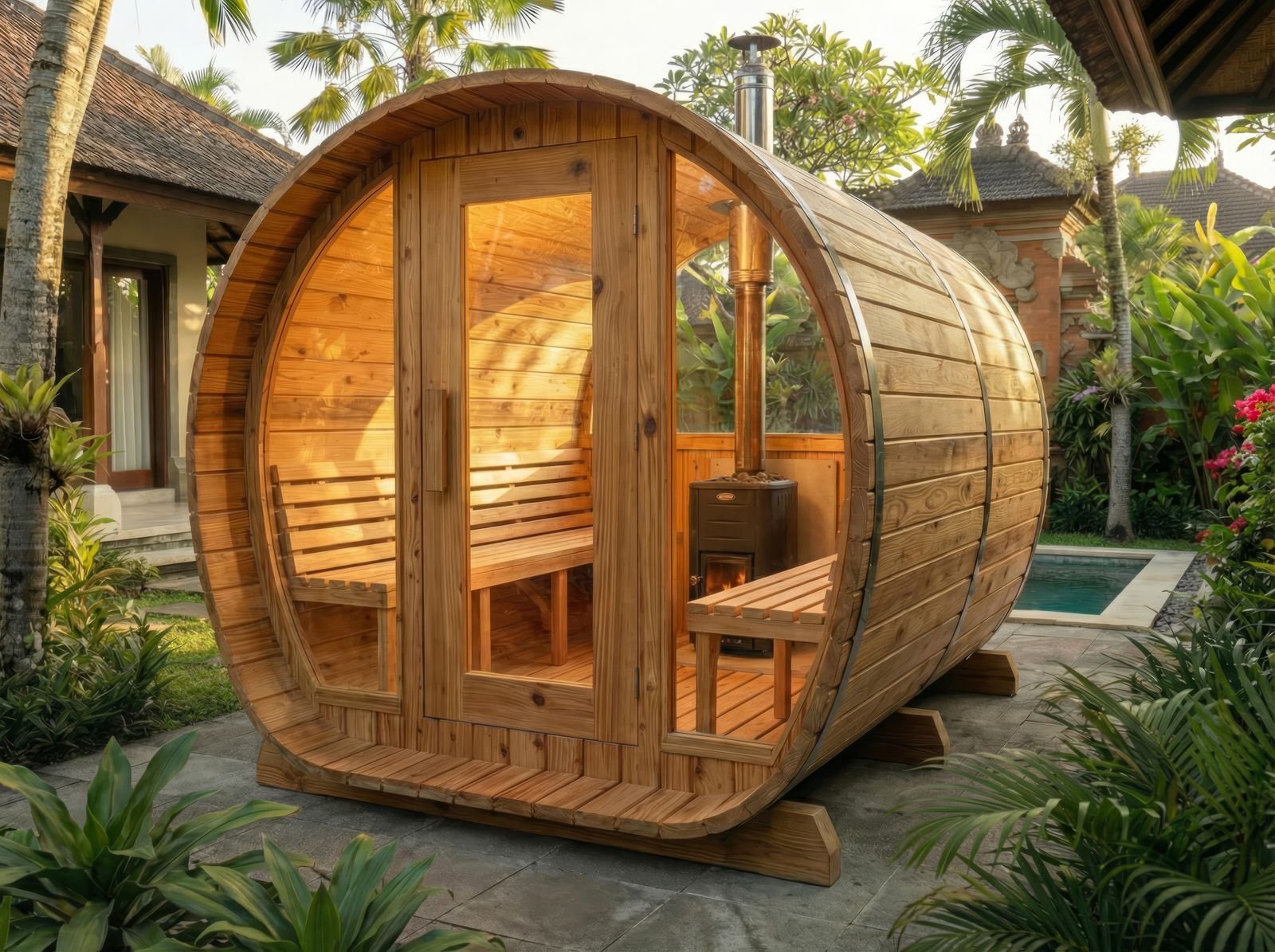
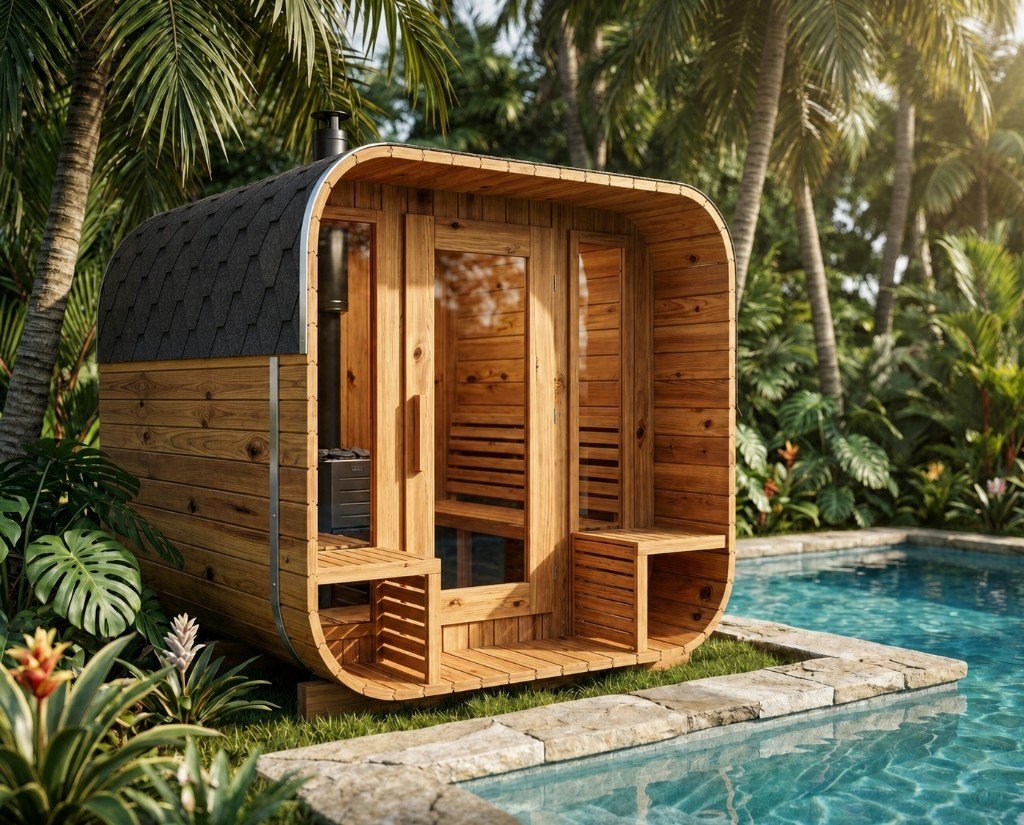
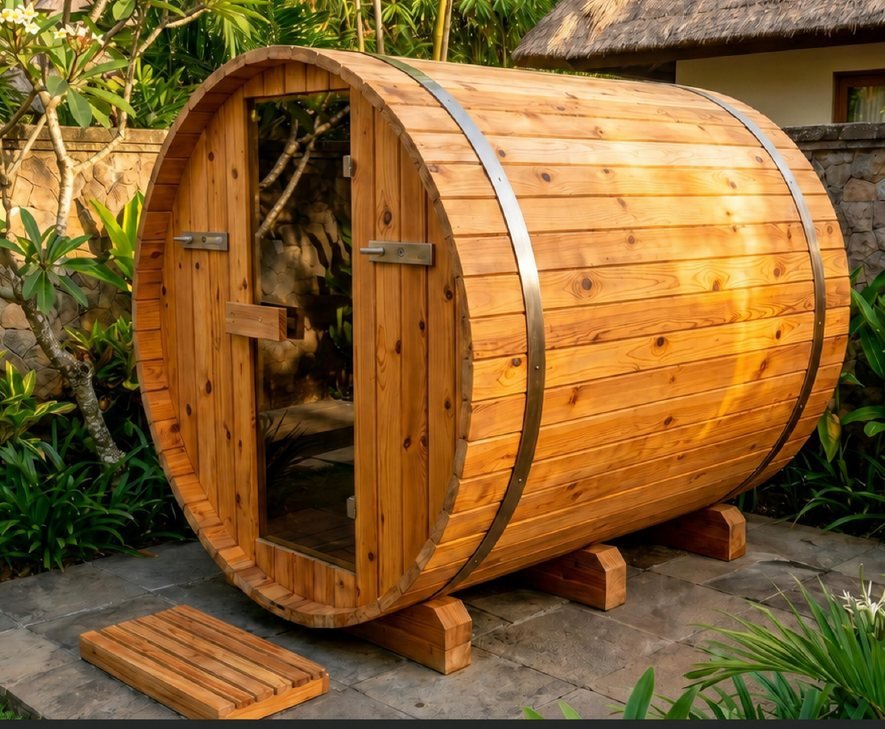
An outdoor sauna is a freestanding cabin in a garden, courtyard, or beside a pool. It has its own roof, weatherproof exterior finish, and base — like our Cube and Barrel models.
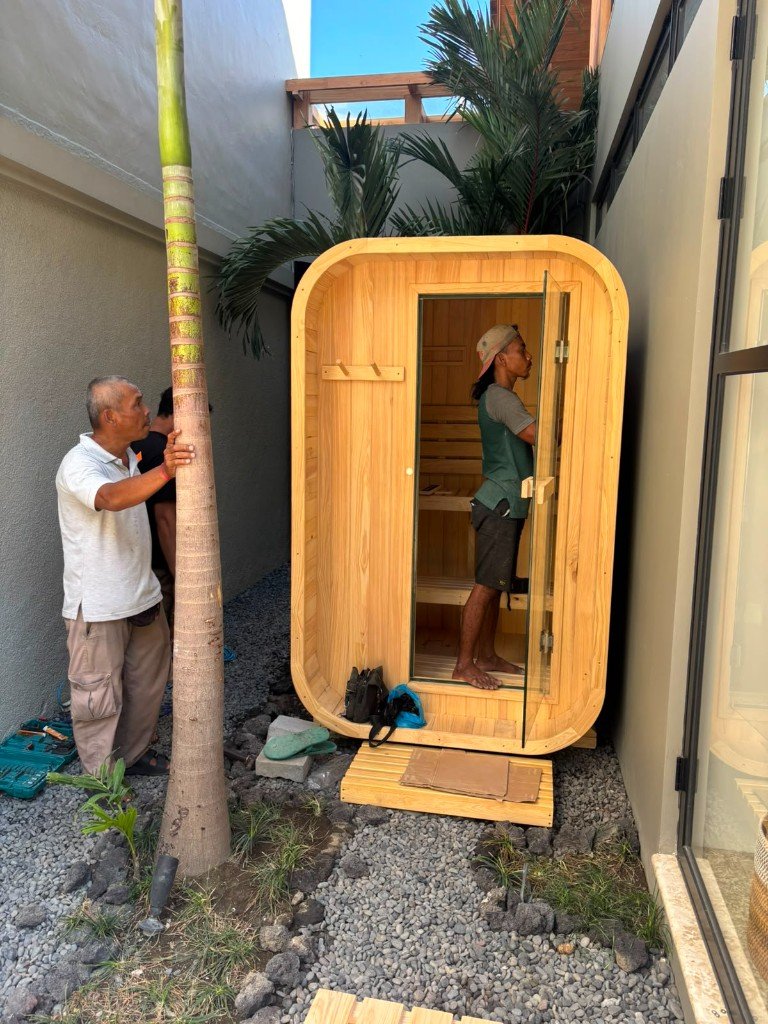
An indoor sauna is built inside an existing room, such as a large bathroom, gym, or spa. It is protected from the weather but depends on the conditions of the surrounding space.
Side-by-side comparison
| Aspect | Outdoor sauna | Indoor sauna |
|---|---|---|
| Location | Garden, courtyard, poolside, a sturdy rooftop | An existing room: bathroom, gym, spa |
| Space needed | Open ground and a level base | Free space inside the building |
| Heater | Electric or wood-fired (pellets/firewood) with chimney | Usually electric; a wood heater indoors is far more complex |
| Ventilation & humidity | Air vents straight to the outside | Needs good ventilation so moisture doesn't spread indoors |
| Maintenance | Exterior walls need regular checks due to rain and sun | Sheltered from weather; focus on room ventilation |
| Installation | Cabin delivered complete or partly assembled, then installed | Often needs extra interior works |
| Atmosphere | Garden or pool views, fresh air between rounds | Practical, private, unaffected by weather |
| Visual appeal | Becomes a landmark in the outdoor area | Hidden inside the building |
When is an outdoor sauna the better fit?
- Villas and resorts that want an open-air wellness experience. A sauna beside the pool looks great in listing photos and on social media.
- Homes with a garden but no spare room indoors.
- You want a wood-fired heater, because electrical capacity is limited or you love the atmosphere of a fire. Heaters like IGNIS use an external firebox, which suits outdoor saunas well.
- Keeping humidity out of the house. Steam and heat stay outside the main building.
When is an indoor sauna the better fit?
- Hotels or gyms whose spa area is inside the building.
- Apartments or homes without a garden.
- Sites with very difficult delivery access, where a complete cabin can't get in.
- You want direct access from the bathroom without stepping outside.
For an indoor sauna, make sure the room has good ventilation, a water-resistant floor, and electrical work done by an experienced electrician.
Recommendations by property type
Private home
If you have a garden, a compact outdoor sauna like the Sauna Cube Small (for 2 people) is often the most practical choice — no renovation, and steam stays outside the house.
Rental villa
An outdoor sauna usually adds more value. Guests enjoy the tropical setting, and the sauna becomes an easy amenity to promote. Place it near the pool or a rinse shower, and consider a 4–6 person model for villas with several bedrooms.
Resort and hotel
Many resorts combine both: an indoor sauna in the spa for all-day use, and one or more outdoor saunas in the garden as a highlight. For busy use, choose a roomier cabin such as the Sauna Cube Large or Sauna Barrel.
Checklist before you decide
- Is there level ground outside, or a free room inside?
- How easy is delivery access to the installation spot?
- Which heater: electric or wood-fired?
- What is the plan for ventilation and drainage?
- Who will use it: family, villa guests, or resort guests?
- Should the sauna also be a visual feature?
FAQ: frequently asked questions
Can an outdoor sauna handle tropical rain?
Outdoor saunas are designed for outdoor conditions. Our models use asphalt shingle roofing, Lasur-Impra outdoor finish, and stainless steel straps. The exterior still needs regular care, especially where it gets direct rain and sun.
Can an outdoor sauna use an electric heater?
Yes. All our models can use an electric or a wood-fired heater. Make sure the electrical supply is sufficient and installation is done by an experienced electrician.
Can an indoor sauna use a wood-fired heater?
Technically it can, but it requires a chimney, safe clearances, and much more complex planning. That is why indoor saunas usually use electric heaters.
Which is easier to install?
A ready-made outdoor sauna is usually simpler: prepare a level base, deliver the cabin, and install it. An indoor sauna often involves extra interior work in the room.
Still deciding? Send us photos of your site and tell us what you need on WhatsApp — we'll recommend the right model, size, and heater. You can also see installed examples in our Portfolio.