Sauna Benefits for Health and Recovery: What Does the Research Say?
Relaxation, deeper sleep, lighter muscles — what research supports, what it doesn't yet, and how to enjoy a sauna safely in a tropical climate.

In Finland, the sauna is part of everyday life. In Indonesia, saunas are increasingly found at villas, resorts, gyms, and private homes. Most people use a sauna simply because it feels good: a warm body, a calm mind, and often a deeper night's sleep.
But what does research actually say about sauna benefits? This article sums it up honestly. We are not medical professionals, so treat it as a general overview, not personal health advice.
What happens to your body in a sauna?
A traditional Finnish-style sauna usually runs at about 70–100°C with low humidity. As you sit inside, your skin temperature rises quickly and your body responds much as it does during light exercise:
- Your heart rate increases and blood vessels in the skin widen.
- You sweat to cool down.
- After stepping out and cooling off, many people feel deeply relaxed.
This response is why the sauna is sometimes called a "passive workout" for the blood vessels.
The most discussed benefits
1. Relaxation and calm
This is the benefit people notice most. Heat, quiet, and the scent of wood help many people unwind. A sauna ritual also keeps you away from your phone for 10–15 minutes — valuable in itself.
2. Heart and blood vessels
The most cited research comes from Finland. A large cohort study by Laukkanen and colleagues (JAMA Internal Medicine, 2015) followed more than 2,000 middle-aged men for around 20 years. Men who used the sauna more often had a lower risk of dying from heart disease.
Note that this is an observational study: it shows an association, not proof of cause and effect. Regular sauna users may also lead healthier lives in other ways. Later reviews (for example in Mayo Clinic Proceedings, 2018) called the findings promising while noting that more research is needed.
3. Recovery after exercise
Many athletes use the sauna for recovery. Heat helps muscles feel looser, and some people notice less soreness. The scientific evidence is still mixed and mostly comes from small studies, so think of the sauna as a complement to rest, nutrition, and sleep — not a replacement.
One important point: don't go straight into the sauna when you are exhausted and dehydrated after a hard session. Drink first, take a break, then use the sauna for a shorter time.
4. Sleep quality
Many users report sleeping better on sauna days. One explanation is that body temperature drops gradually after a hot session, and that drop is linked to sleepiness. Direct research is still limited, but people's experiences are fairly consistent.
5. A social ritual
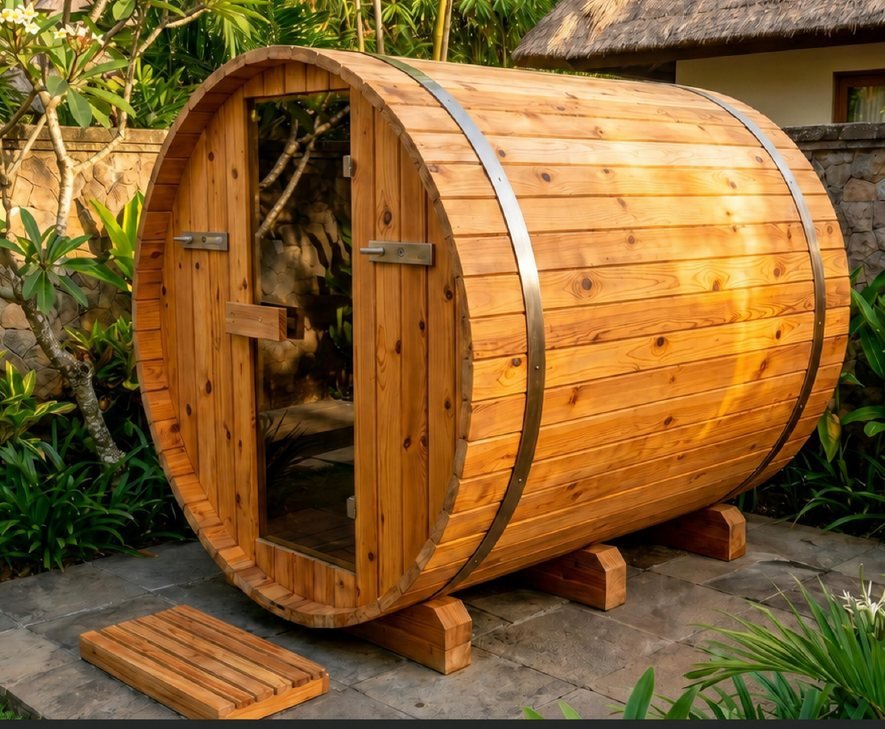
A sauna for 4–6 people, such as the Sauna Barrel or Sauna Cube Large, is a wonderful place for family or villa guests to talk. In Finland, this social side matters as much as the heat.
Claims that are often exaggerated
Be careful with these:
- "Saunas burn fat." Weight lost in a sauna is mostly water (sweat) and returns once you drink.
- "Saunas detox your body." Your kidneys and liver do the real work of removing waste; sweat plays only a very small role.
- "Saunas cure disease." A sauna is not medicine. If you have a health concern, see a doctor.
Safe sauna guidelines
| Topic | General guidance |
|---|---|
| Session length | Many people start with 5–10 minutes and build up to 15–20. Step out if you feel unwell. |
| Rounds | 1–3 rounds, with rest and cooling in between. |
| Fluids | Drink water before and after. In the tropics you are already sweating before you start. |
| Cooling down | Rinse with a cool shower or sit outside. Start gently. |
| Alcohol | Avoid before and during a sauna. |
| Meals | Avoid using the sauna right after a heavy meal. |
Who should take extra care?
Talk to a doctor first if you:
- Have heart disease or uncontrolled blood pressure, or have had a heart attack or stroke.
- Are pregnant.
- Get dizzy easily or have low blood pressure.
- Have a fever or feel unwell.
Children should only use a sauna under adult supervision, with shorter sessions and lower temperatures.
Saunas in a tropical climate: what's different?
Indonesia's hot, humid air makes you sweat faster, so you need more fluids. The upside is that cooling off feels wonderful: a rinse in the shower, a few minutes on the terrace, or a quick dip in the pool. An outdoor sauna with a glass door facing the garden turns those breaks into the best part of the ritual.
FAQ: frequently asked questions
How often should I use a sauna?
There is no single number for everyone. In the Finnish studies, benefits were seen in people who used the sauna several times a week. Start with once or twice a week and adjust to how your body feels.
Is it better to use a sauna before or after exercise?
Usually after, once you have had a drink and your body has settled a little. A sauna before hard training can tire you out sooner.
Is a sauna safe for people with high blood pressure?
It depends on your condition. If your blood pressure is high or you are on medication, ask your doctor before using a sauna.
What is the ideal sauna temperature?
Traditional saunas usually run at 70–100°C. Beginners can choose a lower temperature and sit on the lower bench, where the air is cooler.
Want to bring the sauna ritual to your home, villa, or resort? Explore the Pinewood Sauna collection and our electric and wood-fired heaters, or chat with us on WhatsApp for a free consultation.